
29 Apr Erasmus Teaching Mobility Visit of Prof. Dr. Elena Hadzieva, to the Faculty of Electrical and Computer Engineering (FEEC), University of Campinas (Unicamp), Brazil
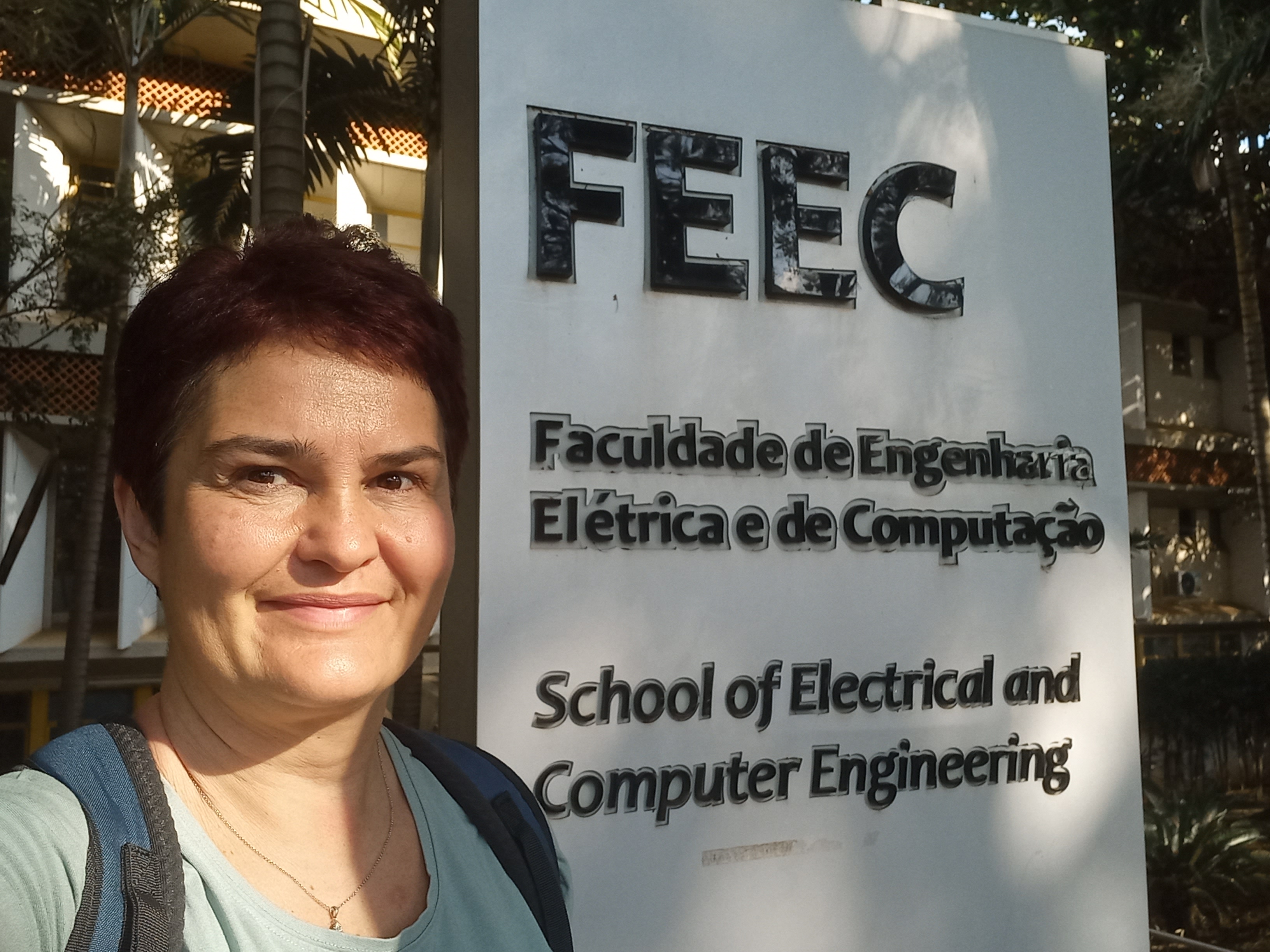
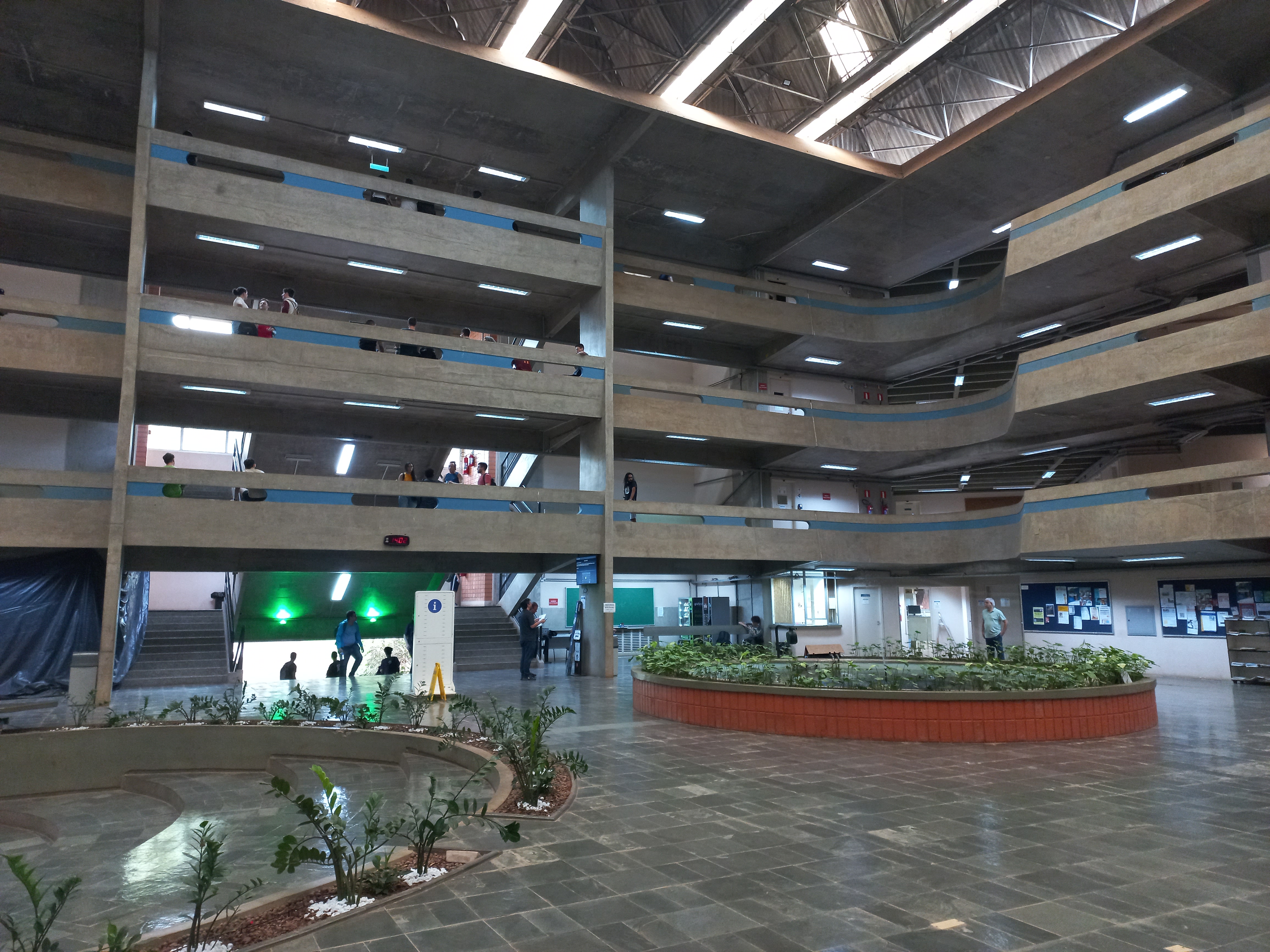
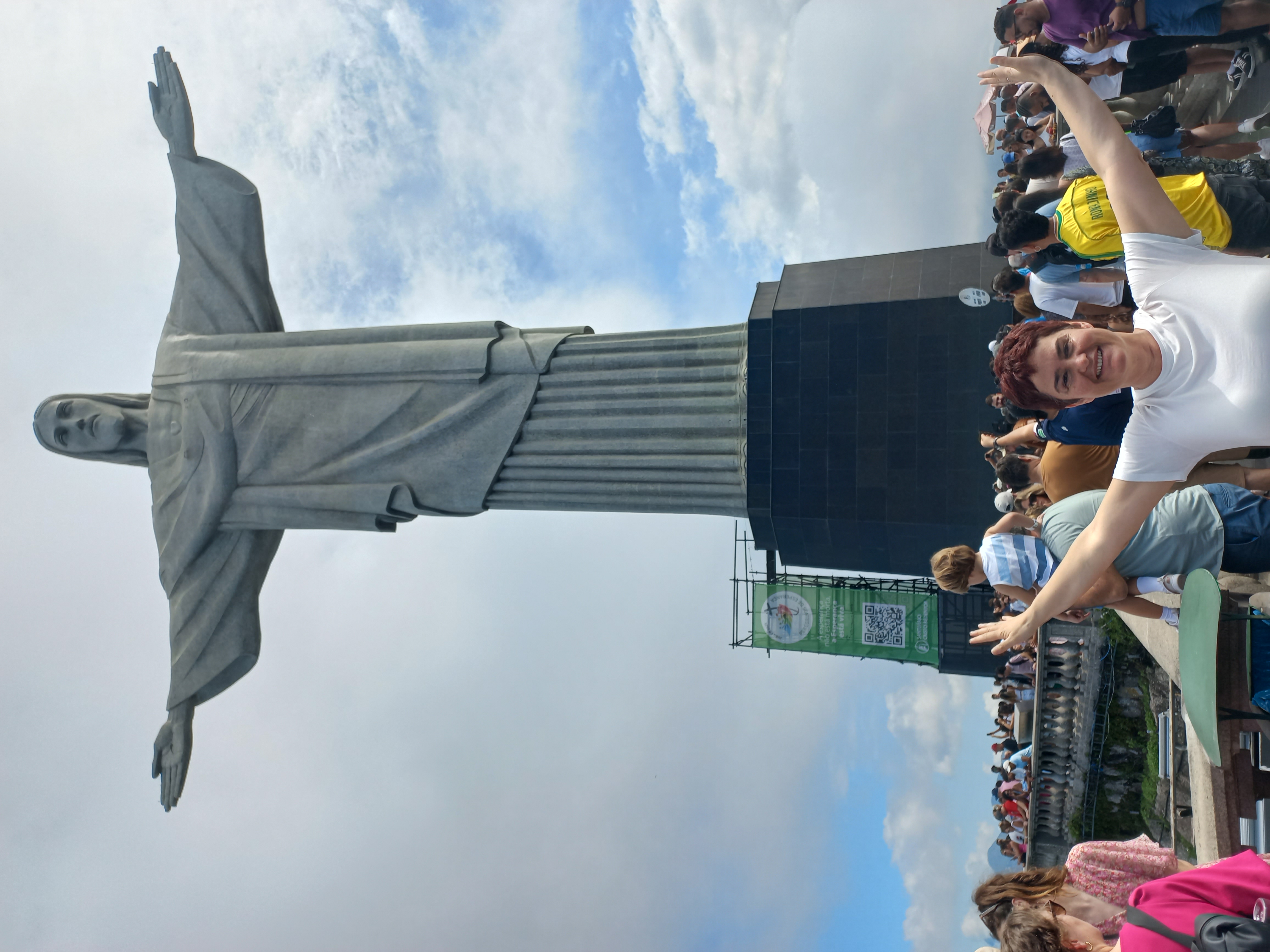
From March 31 to April 5, 2025, Prof. Dr. Elena Hadzieva, completed an Erasmus+ teaching mobility visit to the Faculty of Electrical and Computer Engineering (FEEC) at the University of Campinas (Unicamp) in Brazil.
Prof. Hadzieva was hosted by Prof. Dr. Max Henrique Machado Costa, and Prof. Dr. José Cândido Silveira Santos Filho, from the FEEC, as well as Prof. Dr. Sueli Irene Rodrigues Costa, from the Institute of Mathematics, Statistics, and Scientific Computing at Unicamp.
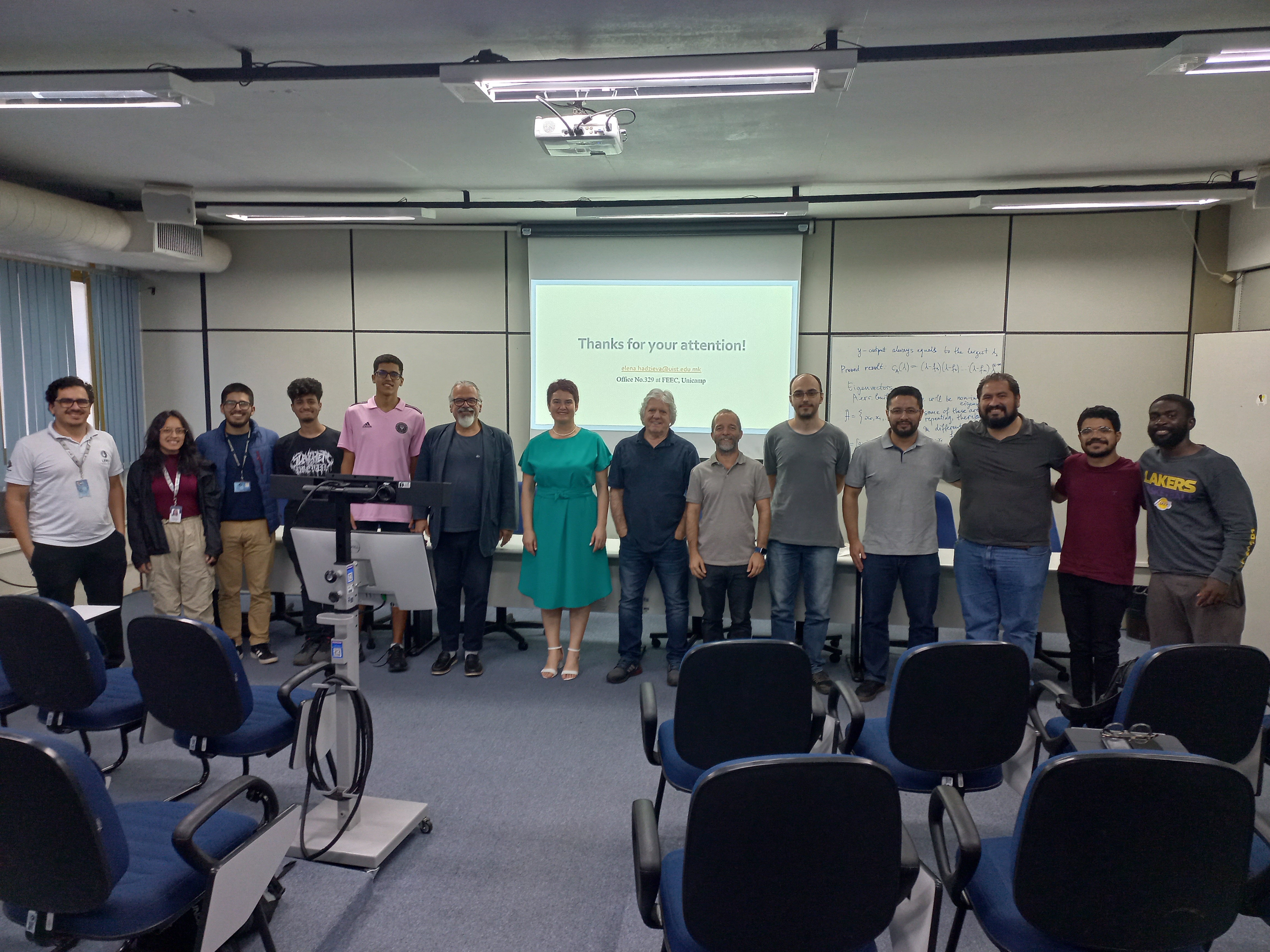
Throughout the visit, Prof. Hadzieva delivered four lectures to master’s and doctoral students at FEEC. Each session lasted two academic hours and began with a short presentation introducing the University “St. Paul the Apostle,” the city of Ohrid, and the Republic of North Macedonia.
The topics of the lectures were as follows:
Mathematics is Beautiful
This lecture highlighted the artistic and aesthetic dimensions of mathematics, emphasizing qualities such as balance, order, precision, and truth. Prof. Hadzieva demonstrated the connections between mathematics and music, painting, lens-based media, and design, inspiring a renewed appreciation for the beauty of mathematics.
Mathematics is Useful
The second lecture focused on the critical role of mathematics in electrical engineering and artificial intelligence. Through case studies on ill-conditioned systems and the Newton-Raphson method for optimization, Prof. Hadzieva stressed the importance of deep understanding and critical thinking. She also shared an inspiring story of collaboration between a mathematician and a microelectronics engineer on the development of n-modular redundancy voters.
Mathematics at the Core of AI: Program Correctness – Part 1
This lecture introduced fundamental rules of inference, including Modus Ponens, Modus Tollens, Hypothetical Syllogism, and others. Students engaged with examples of applying these rules to draw conclusions and prove theorems, establishing a logical foundation essential to artificial intelligence.
Mathematics at the Core of AI: Program Correctness – Part 2
Building on the previous session, Prof. Hadzieva applied these logical principles to program verification and proof of program correctness. She also demonstrated the use of mathematical induction in proving the correctness of recursive algorithms, illustrating key concepts in automated reasoning, knowledge representation, natural language processing, and planning.
The lectures were very well-received by both students and faculty members, sparking vibrant discussions and a strong appreciation for the interdisciplinary approach and insights from our university and country.
We congratulate Prof. Hadzieva on successfully representing the University “St. Paul the Apostle” and thank our hosts at Unicamp for their warm welcome and collaboration.