
05 Mar IoT Student Projects Presented at UIST
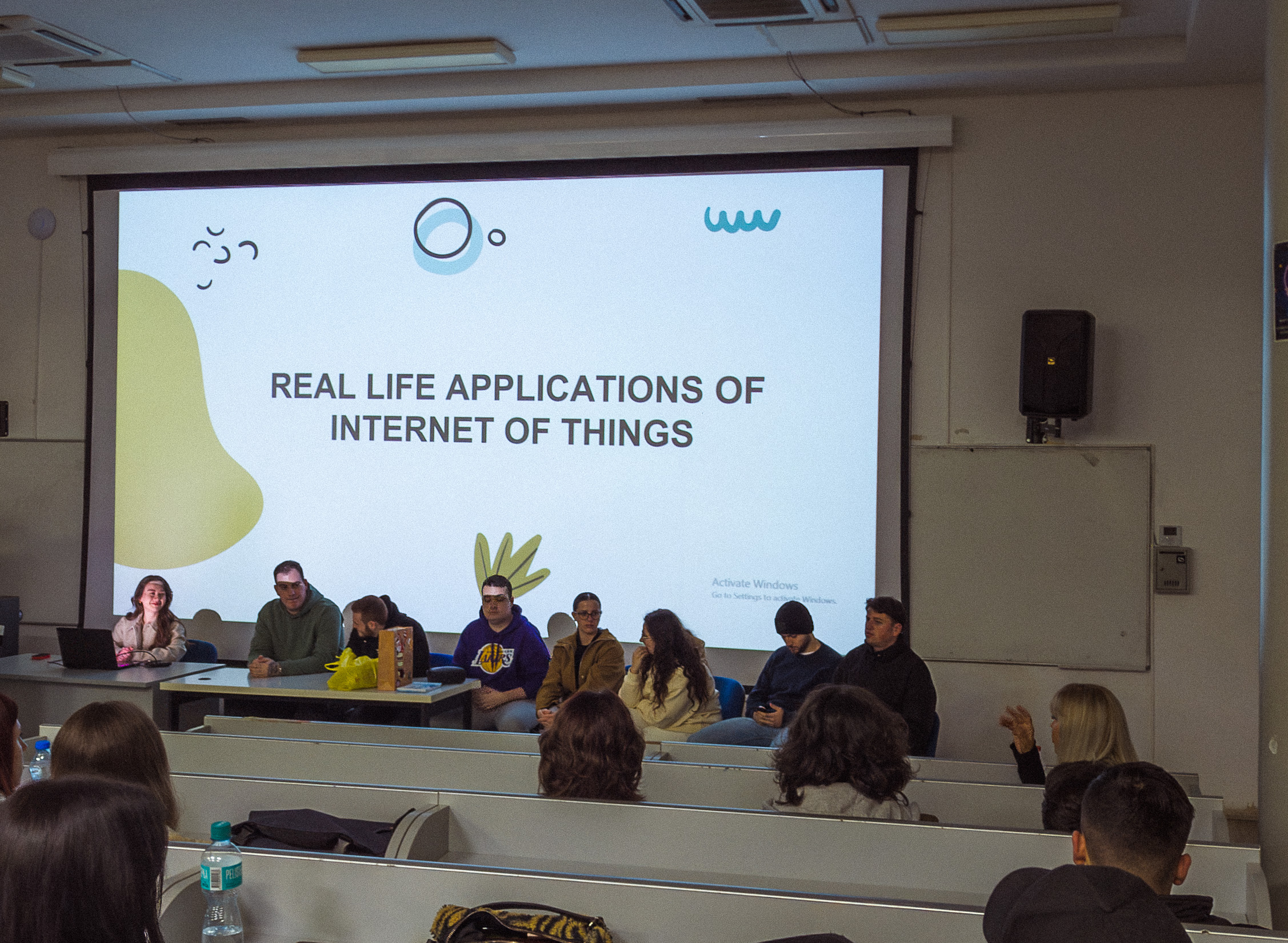
Students from the Internet of Things (IoT) course at the University of Information Science and Technology “St. Paul the Apostle” presented their final projects for the 2025–2026 academic year under the supervision of Prof. Daniela Mechkaroska, Ph.D.
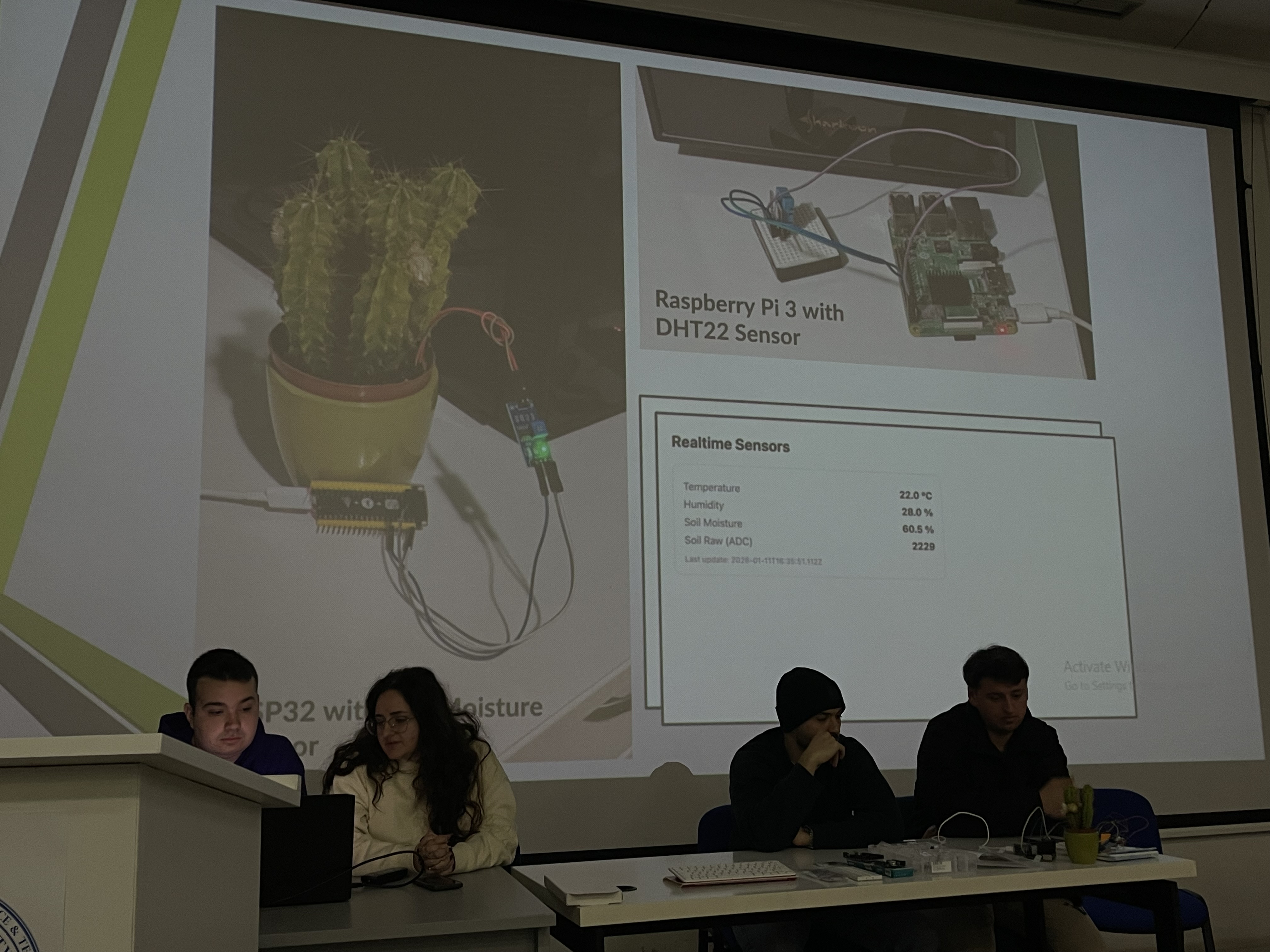
The projects demonstrate the practical application of IoT technologies through the integration of sensors, microcontrollers, and software platforms. Using tools such as Arduino, ESP32, Raspberry Pi, MQTT, and Node.js, students designed systems capable of monitoring environmental conditions and automating everyday processes in different domains.
Among the presented projects was a Smart Agriculture IoT greenhouse monitoring system developed by Marija Poposka, which collects temperature and humidity data to help maintain stable growing conditions. Darko Sokoleski designed an automated water level control system that activates a pump when water levels fall below a defined threshold, supporting efficient water management.
Bojan Paunkoski presented a Smart Environment Monitor that measures indoor temperature and ambient light levels and provides visual indicators of environmental conditions. A Smart Access and Light Control System, developed by Milena Simonoska, combines RFID authentication with MQTT communication and a web dashboard to enable real-time monitoring and control of devices.
The IoT Sensor Hub – Environmental Monitoring System, created by Radmila Gerasimova and Valentin Duracoski, integrates multiple sensors and visualizes environmental data through a web interface using Raspberry Pi and ESP32 devices. Izo Kjamiloski developed a temperature and humidity monitoring system with a buzzer alert that activates when predefined safety thresholds are exceeded.
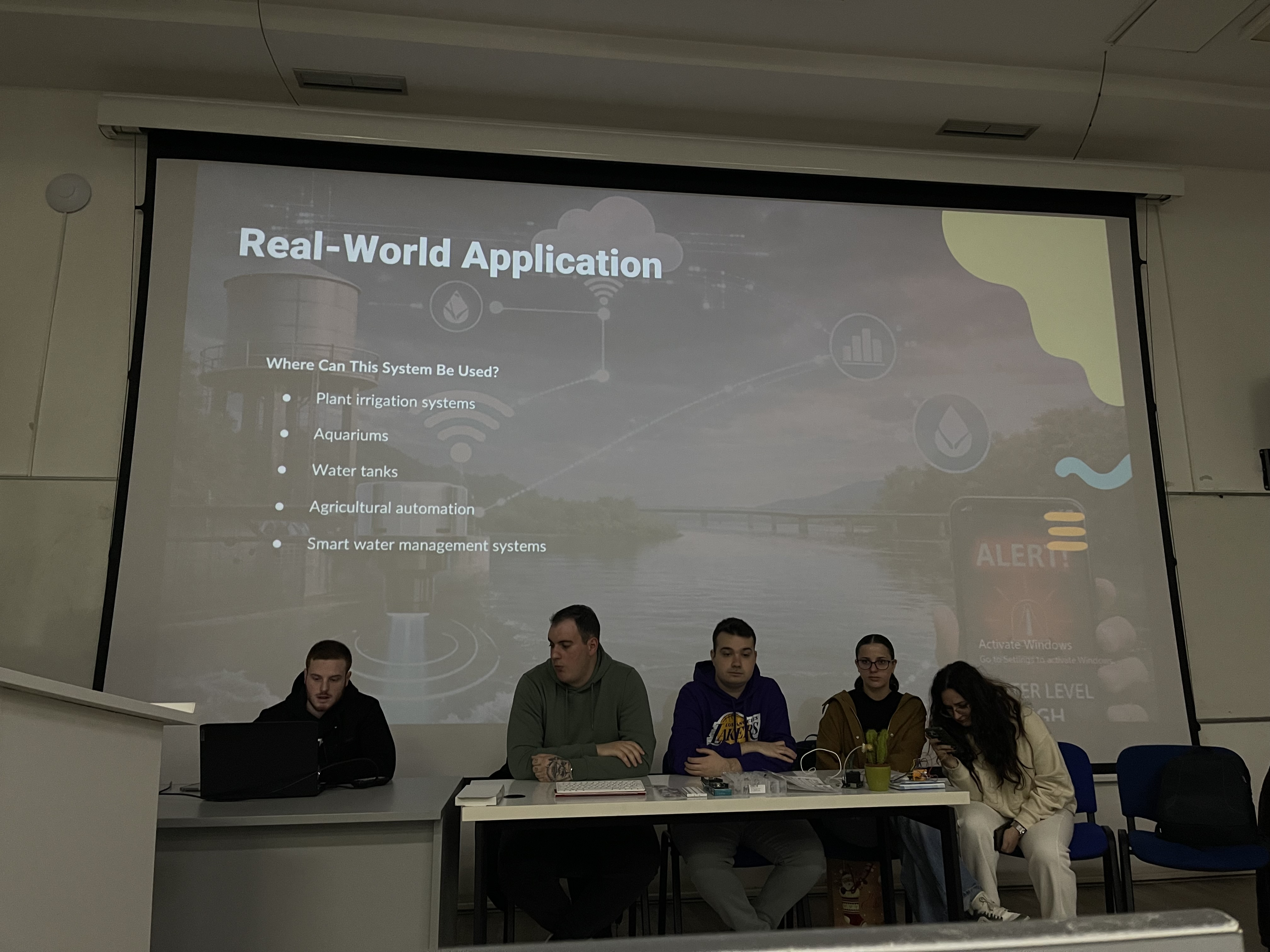
Another project, the Smart Irrigation System by Ditlir Emush, automatically activates irrigation when soil moisture levels drop, supporting more efficient water usage and reducing the need for manual watering.
Through these projects, students gained practical experience in designing IoT architectures, integrating hardware and software components, and developing systems that can be applied in real-world technological environments.